RunNerd was built because the data was always there, and reading it was the unlock.
Aaron spent years in the gym before he ever ran a mile that wasn't on a treadmill warm-up. Strength training had clear language — sets, reps, percentages, progressive overload. You could see what was working.
Running showed up later. The watch came with it. From the first run, the data was being collected — pace, heart rate, cadence, splits, zones. Nothing about it was readable.
Aaron started feeding his runs to AI to interpret. Not to get a generic plan, but to ask: "What just happened?" Week by week, the trend lines started building.
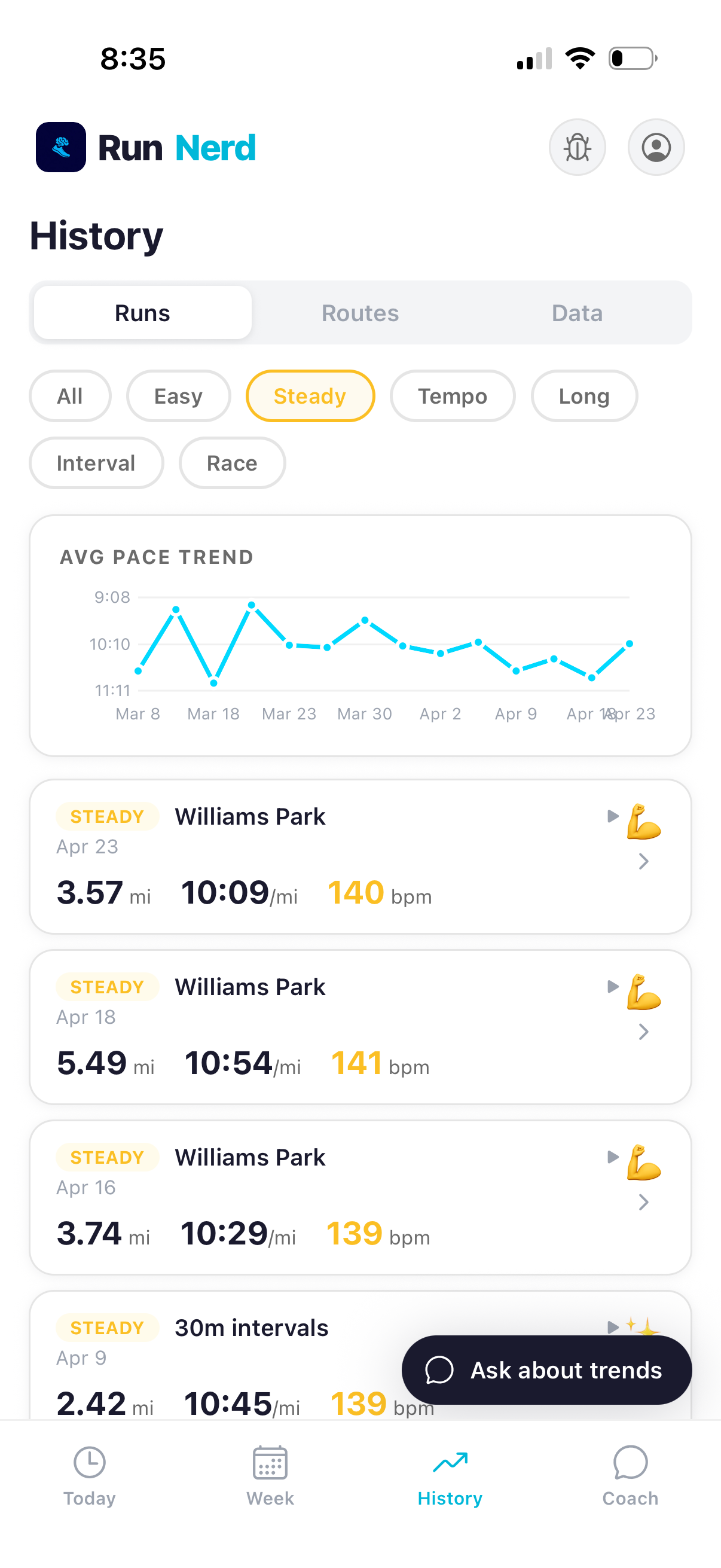
Same pace at lower heart rate. Better zone discipline — fewer runs accidentally too hard, more runs in the right effort range. Cadence climbing. None of it dramatic on its own; all of it real, accumulating.
One Sunday he looked at the chart and realized: he'd been running smarter for weeks without knowing it. The data had been telling him the whole time. He just couldn't hear it.
RunNerd is the tool Aaron wishes he'd had. Not a coach that pushes you. A coach that reads you — the runs you actually did, the routes you actually run, the zones you actually live in.
For new runners learning the sport. For experienced runners chasing a PR. The same translation problem, the same translator.
RunNerd is in active TestFlight development. Apple Watch-first today, with direct Garmin integration shipping after Beta. Bug reports become fixes within hours.
Follow the build on Instagram. Join the list below to hear when new versions ship and beta invites open up.